
Insights

Ideas from the drawing board and the site

Practical perspectives on structural systems, construction assurance, renewables, and working across international design codes.

Articles

Latest thinking from our practice

Prestressed Concrete in Long-Span Bridge Design

Structural Engineering · March 2026 · 6 min read

Prestressed Concrete in Long-Span Bridge Design

How modern prestressing strategies improve economy and durability across bridge and building substructures.

Prestressed concrete remains one of the most efficient structural systems for long-span bridges and transfer structures in buildings. When designed with care, it reduces section depth, controls deflection, and improves crack performance under service loads.

At Northline, our teams routinely apply Eurocode prestressing principles to box girders, piers, flat slabs and long-span beams. Early optioneering of tendon profiles, construction staging and temporary works often unlocks more buildable—and more economical—solutions than a purely reinforced approach.

Durability is equally critical. Detailing for cover, duct detailing, and construction quality assurance are as important as the analysis model. We treat prestressing as a system: design, temporary works, and site method statements must align.

Temporary Works: Assuring Safety on Complex Sites

Construction · February 2026 · 5 min read

Temporary Works: Assuring Safety on Complex Sites

Best practices for temporary works design, technical assurance, and contractor interfaces on live infrastructure sites.

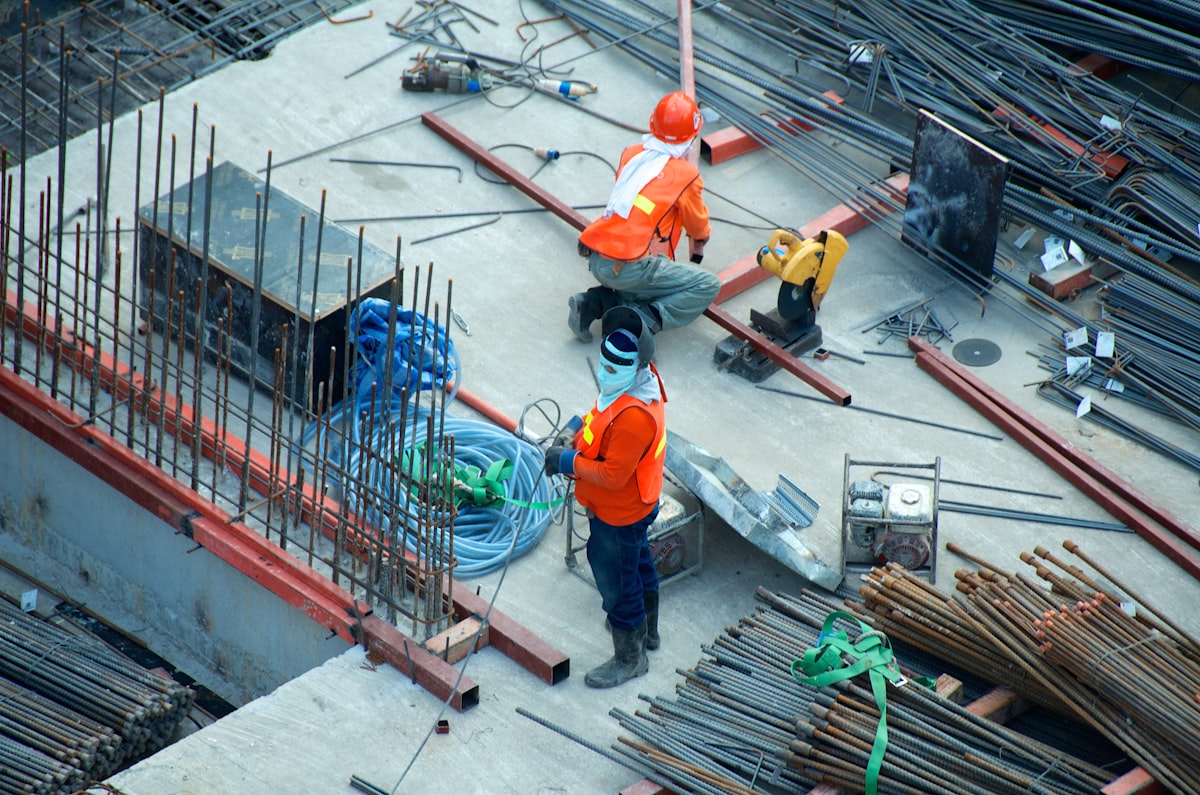
Temporary works are where design intent meets construction reality. Falsework, propping, excavation support, and lifting frames demand the same analytical rigor as permanent works—often under tighter programme pressure.

Our approach emphasises clear design briefs, defined loading assumptions, and unambiguous temporary–permanent interfaces. For rail and highways environments, we also align with client assurance frameworks and site competency requirements.

Effective temporary works reduce risk, protect programmes, and give contractors confidence. That is why we treat temporary works design as a core capability, not an afterthought.

Structural Considerations for Offshore Wind

Renewables · January 2026 · 7 min read

Structural Considerations for Offshore Wind

Load-out, sea-fastening, and heavy-lift engineering that underpin reliable offshore renewable assets.

Offshore wind structures experience a uniquely demanding life cycle: fabrication yard load-out, sea transport, heavy lift or launch, installation, and decades of fatigue under combined wind and wave loading.

Transportation and installation engineering is therefore inseparable from structural design. Sea-fastening, barge grillages, lifting points and upending sequences must be analysed with the same discipline as in-place conditions.

Northline supports clients and EPCs with these interfaces—bridging fabrication, marine operations, and permanent structural performance for renewable energy assets.

Working Across International Design Codes

Practice · December 2025 · 4 min read

Working Across International Design Codes

How multi-code fluency reduces risk on cross-border engineering assignments.

Global projects rarely speak a single code language. A London-led scheme may require Eurocodes for the permanent works, alternate standards for process structures, and local authority overlays for statutory approvals.

Our engineers are fluent across major European, North American, Middle Eastern, and Asia-Pacific design standards. That fluency reduces translation risk when teams, fabricators and approving authorities sit in different jurisdictions.

The practical advantage is speed and certainty: fewer redesign loops, clearer review comments, and design packages that travel cleanly from studio to site.

Start a Conversation

Ready to engineer your next landmark project?

Book a free online consultation with our chartered engineers. From concept to completion certificate—we're ready to partner.